
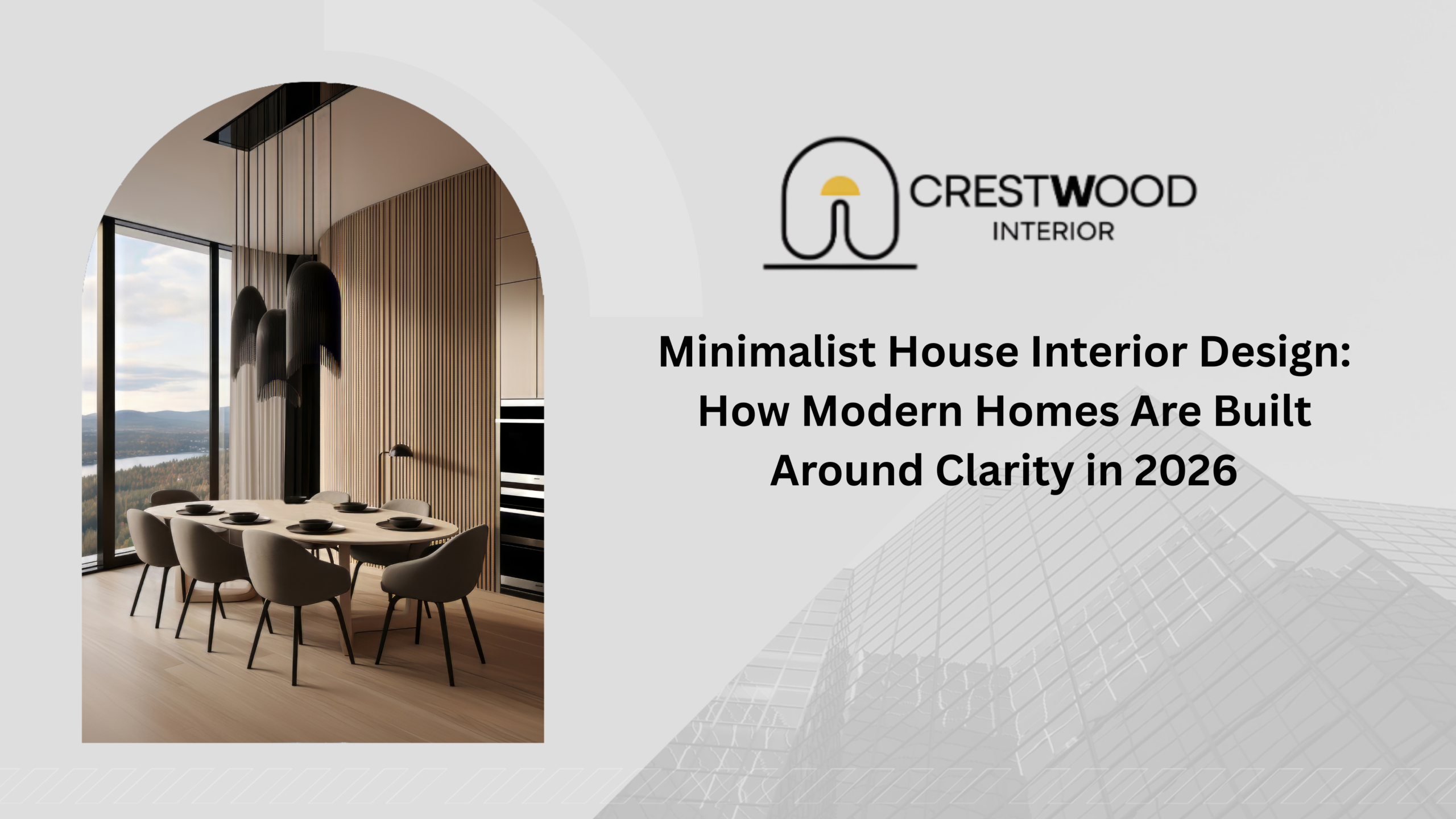
Minimalist House Interior Design: How Modern Homes Are Built Around Clarity in 2026
The concept of minimalism often conjures images of stark, empty rooms, white walls, and a distinct lack of personal items. But as we move further into the decade, this design philosophy is evolving. The new minimalism of 2026 is less about absence and more about presence—the intentional presence of clarity, function, and personal well-being.
Minimalism is no longer about simply removing clutter or adhering to a rigid aesthetic of emptiness; it’s a thoughtful approach to creating homes that serve as a quiet, empowering foundation for our lives. A modern minimalist house interior design is built on the principle that your environment should reduce mental friction, not create it.
In this comprehensive guide, we will explore how this philosophy translates into tangible design choices, from architectural planning to the integration of “calm technology.” We will look at how minimalism is a tool for creating function, flow, and a profound sense of peace within your four walls
The Core Shift: From Aesthetic to Experience
True minimalism begins not with a color palette or a furniture catalog, but with a question: “How do I want to feel in this space?” The focus has shifted from creating a photo-ready interior to engineering a specific experience defined by ease of movement, visual calm, and effortless functionality.
Why Design Starts With Removing, Not Adding
The journey to a minimalist home starts with a process of intentional subtraction. Before considering what to add, the first step is to evaluate what can be removed. This isn’t just about decluttering possessions; it’s about stripping away visual noise, unnecessary architectural details, and anything that obstructs light and movement.
This act of removing is powerful. It forces you to define what is truly essential for your lifestyle. By eliminating distractions, you create a clean canvas. This allows the inherent qualities of the space—its volume, light, and structure—to become the main features. The goal is to create a home that feels open and effortless, and that sense of freedom is achieved by what you choose to leave out, not by what you put in.
Redefining “Best Home Interior”
In a minimalist context, the definition of the “best home interior” changes significantly. It moves away from traditional markers of luxury, such as expensive ornamentation or a collection of designer objects. Instead, “best” is redefined as a measure of ease, flow, and the absence of friction in daily life.
Is the home easy to clean and maintain? Can you move through it without obstruction? Does the space adapt to your changing needs? Does it provide a sense of mental calm at the end of a busy day? In 2026, the ultimate luxury is a home that supports your well-being by removing complexity.
Structural Minimalism: Architecture and Flow
A successful minimalist home relies on the clear definition of functional zones and the intelligent use of space, rather than the erection of walls.
Minimalist Furniture as a Planning Tool
In this design framework, furniture transcends its role as simple decoration. It becomes a crucial tool for architectural planning. Each piece of minimalist furniture is chosen not just for its look but for its ability to define the function and flow of a room.
Think of furniture as a way to sculpt your space. A strategically placed low-profile sofa can delineate a living area from a walkway without blocking sightlines. A dining table can anchor a room, creating a zone for gathering without needing partitions. The pieces you choose establish sightlines, protect circulation paths, and enforce spatial discipline. It’s a shift from asking “Does this look good?” to “How does this work?”
Ceiling Design as the Silent Driver
Often overlooked, the ceiling is a critical element in minimalist design. A thoughtful home interior ceiling design acts as a silent partner in controlling the atmosphere of a space. In many modern homes, the goal is to create an uninterrupted plane that enhances the feeling of height and openness. This means hiding services like ductwork, integrating lighting seamlessly, and avoiding ornate features like heavy cornices.
The ceiling can also be used to subtly define zones. A slight drop in ceiling height over a dining area can create a sense of intimacy within a larger open-plan room. Recessed lighting tracks can be used to wash a wall with light, drawing attention to texture or a single piece of art. By treating the ceiling as a fifth wall, designers can guide attention and shape the experience of a room without adding clutter.
Defining Zones Without Walls
A common misconception is that minimalist homes are just vast, undefined halls. In reality, clarity comes from distinct zones. You can create a “pause” zone with a single armchair and a floor lamp by a window, a “transition” zone in a hallway kept clear of all objects, and a “private” zone in a bedroom where simplicity promotes rest.
This approach brings order and purpose to the space. It ensures that every square foot has a role, making the home intuitive to live in. Navigating the space becomes effortless because the design language silently communicates where each activity belongs.
The Palette of Calm: Color and Light
Shaping Perception with Color
Color in a minimalist home is not about chasing trends; it’s about manipulating perception and mood. The best colour combination for a home is one that promotes visual continuity and tranquility. This often involves a limited palette of soft, neutral tones like off-whites, warm grays, and muted earth colors.
The power of this approach lies in how these colors interact with light. A single, continuous color on walls, ceilings, and even floors can make a room feel larger and more unified. It eliminates the visual breaks that can make a space feel choppy or small. The focus is on creating a seamless backdrop where light can move freely, creating soft shadows and subtle shifts in tone throughout the day.
Light as a Material
In 2026, light is treated as a physical material. Large windows are essential, but managing harsh daylight is equally important. The goal is to create a soft, diffused glow rather than blinding glare. This is achieved through the use of sheer curtains, louvers, or matte surfaces that diffuse reflection. Artificial lighting is layered—ambient, task, and accent—to allow the mood of the home to shift from energetic in the morning to restorative in the evening.
2026 Evolutions: Technology and Sustainability
Modern minimalism isn’t just about what you see; it’s about the invisible systems that support your life.
Technology: The Invisible Assistant
In a minimalist home, technology should be a silent partner, not a noisy intruder. The aim is to integrate smart features that enhance convenience without adding visual clutter. This is the era of “calm technology.”
- Adaptive Lighting: Smart lights shift in color temperature and brightness, mimicking the natural progression of sunlight to support healthy circadian rhythms.
- Hidden Audio: In-wall or ceiling speakers provide immersive sound without the visual bulk of traditional equipment.
- Integrated Charging: Wireless charging pads built directly into furniture or stone countertops eliminate the visual chaos of cables.
- Smart Blinds: Automated window treatments adjust with the sun, balancing privacy and natural light without manual intervention.
Sustainability: Less is Greener
A core tenet of minimalism is to consume less, which naturally aligns with sustainable living. Sustainable minimalist house interior design goes beyond simply owning fewer items; it involves making conscious choices about the materials that form the very fabric of your home.
- Renewable Materials: Utilizing cork or bamboo flooring, which are harvested sustainably.
- Circular Design: Opting for furniture made from reclaimed wood or metal, finding new life in old objects.
- Natural Textiles: Focusing on organic cotton, linen, and wool, which are biodegradable and free from harmful chemicals.
- Longevity: Choosing high-quality, timeless pieces over fast-furniture trends reduces waste and ensures your home is filled with objects built to last a lifetime.
Global Influences on Modern Minimalism
While often associated with Western modernism, the minimalism of 2026 draws deeply from global traditions to create spaces that are warm and layered.
- Japanese Minimalism (Wabi-Sabi): This philosophy finds beauty in imperfection and impermanence. It celebrates natural materials, asymmetry, and a sense of tranquility. Incorporating a handcrafted ceramic piece or a textile with natural irregularities brings a touch of organic warmth to clean lines.
- Scandinavian Minimalism (Hygge): This approach emphasizes comfort and well-being. It prevents minimalism from feeling cold by focusing on warm woods, soft lighting, and inviting textures.
Mediterranean Minimalism: Drawing inspiration from coastal regions, this style uses a palette of sun-bleached whites and earthy tones. It features natural materials like plaster, stone, and terracotta, creating a sense of rustic simplicity and connection to the earth.
The Psychology of Living Less
In a world of endless options, true creativity is found in restraint. For creative interior designers, the skill is not in how much they can add to a space, but in knowing precisely when to stop. Restraint is an active and difficult discipline.
It involves making hard choices to protect the core concept of a design. It means saying no to a beautiful object that doesn’t serve a purpose or resisting the urge to fill every empty surface. This intentional editing process ensures that every element that remains has maximum impact.
Mental Health Benefits
Research consistently shows that a well-organized environment leads to physiological benefits.
- Reduced Anxiety: Clutter spikes cortisol. Clear surfaces offer a sense of control.
- Increased Focus: Fewer visual distractions help you concentrate on work or connection.
Better Sleep: Calm colors and decluttered bedrooms create an environment conducive to rest.
Practical Execution: From Planning to Living
Comparison: Traditional vs. Minimalist Approach
|
Space |
Traditional Approach |
Minimalist Improvement |
|
Entryway |
Console table with decor, mail piles, umbrella stand |
Single bench, hidden shoe storage, wall hooks, clear surfaces |
|
Living Room |
Multiple sofas, scattered decor, heavy drapes |
Modular sofa, one striking centerpiece, open sightlines, sheer window treatments |
|
Kitchen |
Crowded counters, utensils in jars, appliances visible |
Only daily-use items on display, hidden storage, uncluttered prep space |
|
Bedroom |
Decorative bedding, throw pillows, heavy furniture |
Soft linens, one accent cushion, warm lighting, floating nightstands |
|
Office |
Large desk, file piles, visible stationery |
Simple desk, wall shelf, digital filing, clean desktop |
Common Mistakes to Avoid
Transitioning to minimalism can be tricky. Avoid these common pitfalls:
- Removing Storage: Don’t remove storage to “reduce clutter” only to find you have nowhere to put necessary items. Use built-in cabinetry to hide everyday life.
- The “Hospital” Look: Avoid sticking strictly to cold whites. Use soft neutrals and natural textures to add warmth.
- Aesthetics Over Comfort: Never sacrifice ergonomics for style. A minimalist chair must still be comfortable to sit in.
- Bad Lighting: Relying on a single overhead light makes a room feel flat. Layer your lighting.
Practical Steps to Build Clarity
- Establish “Visual Rest Stops”: Leave specific surfaces or walls intentionally bare. These pauses let your mind unwind and help rooms feel larger.
- The “One In, One Out” Rule: Adopt a routine where for every new item you bring in, one must leave. This maintains the balance of the ecosystem.
- Define Zones with Rugs: Use area rugs to ground furniture arrangements, creating “rooms” within open spaces without building walls.
Bring Nature Inside: A single large plant often does more for a room than a shelf full of knick-knacks. It adds life, color, and air purification.
Regional Adaptation: The Hyderabad Case Study
Applying minimalist principles requires regional adaptation. A generic approach simply won’t work in every climate. Let’s look at interior design in Hyderabad as a prime example of how context shapes minimalism.
- Climate Response: The intense heat of the region suggests a need for cool surfaces. Minimalist homes here often feature polished concrete, granite, or natural stone flooring that remains cool underfoot.
- Light Management: While large windows are desirable, the harsh daylight must be managed. The use of louvers, overhangs, and sheer drapes is essential to diffuse the light, preventing heat gain while illuminating the interior.
- Urban Density: Many interior decorators in Hyderabad work with apartment spaces where maximizing every inch is critical. Minimalism excels here through the use of built-in storage and multi-functional furniture, making compact homes feel spacious and serving as a serene escape from the city’s chaotic energy.
- Cultural Integration: Local minimalism might celebrate regional crafts—perhaps a single, intricate handwoven rug or a piece of Bidriware—placed as a focal point against a clean, modern backdrop.
Final Audit: How to Know It's Done Right
So, how can you tell if a minimalist design has truly succeeded? It’s not about how it looks in a photograph, but how it feels to live in. Perform these clarity checks:
- Visual Noise: Does your eye have a place to rest, or is it constantly jumping from one object to another?
- Movement: Can you walk through your home without navigating an obstacle course of furniture?
- Adaptability: Can the space easily accommodate guests or a new hobby without feeling cluttered?
- Mental Calm: Does your home feel like a sanctuary?
A successful minimalist house interior design is one that answers these questions positively, creating a space that is not just clean, but truly clear.
7 Most-Searched Related Questions: Minimalist Interior Design.
1. What is minimalist house interior design?
Minimalist house interior design is about reducing clutter and focusing on what’s truly necessary. It uses simple layouts, neutral colors, and functional furniture to create calm, easy-to-maintain spaces where every item serves a purpose.
2. How can I make my house look minimalist?
Start by decluttering—remove unused items and clear surfaces. Use a neutral color palette, select only essential and functional furniture, and avoid overdecorating. Maximize natural light and ensure every object has a designated home.
3. Is minimalism good for small spaces?
Yes, minimalism is ideal for small homes or apartments. By using compact, multi-functional furniture and cutting down on visual clutter, rooms appear larger and more open, maximizing usable footage.
4. What colors are best for minimalist interiors?
Soft whites, warm grays, light beiges, and pale earth tones are best. These shades reflect light and create a sense of continuity. Add accents of natural wood or greenery for warmth and interest without visual chaos.
5. Does minimalist design mean boring or cold?
No, not if done right. To avoid a sterile look, layer in texture (wool, linen, wood, stone), use warm lighting, and keep a few meaningful personal or sentimental objects. Texture replaces ornamentation in modern minimalism.
6. Can technology and minimalism work together?
Absolutely. Smart home features like automated lighting, hidden sound systems, and integrated controls reduce visual clutter (like switches and wires) and increase convenience, fitting perfectly with a minimalist approach to “calm living.”
7. What mistakes should I avoid when designing minimalistically?
Don’t make everything stark or uncomfortable—balance is key. Avoid removing needed storage, which leads to clutter later. Don’t rely solely on cool white light, and ensure you keep items that are useful or truly meaningful to you.
Conclusion
Minimalist house interior design in 2026 is all about clarity—clarity of space, mind, and purpose. It is a rejection of the unnecessary in favor of the essential. By combining smart architectural planning, sustainable choices, and a focus on human experience, you can build a home that does more than just shelter you—it recharges you.
Ready to simplify your home, live better, and clear mental space? Minimalism isn’t about having less; it’s about making room for more of what matters.