
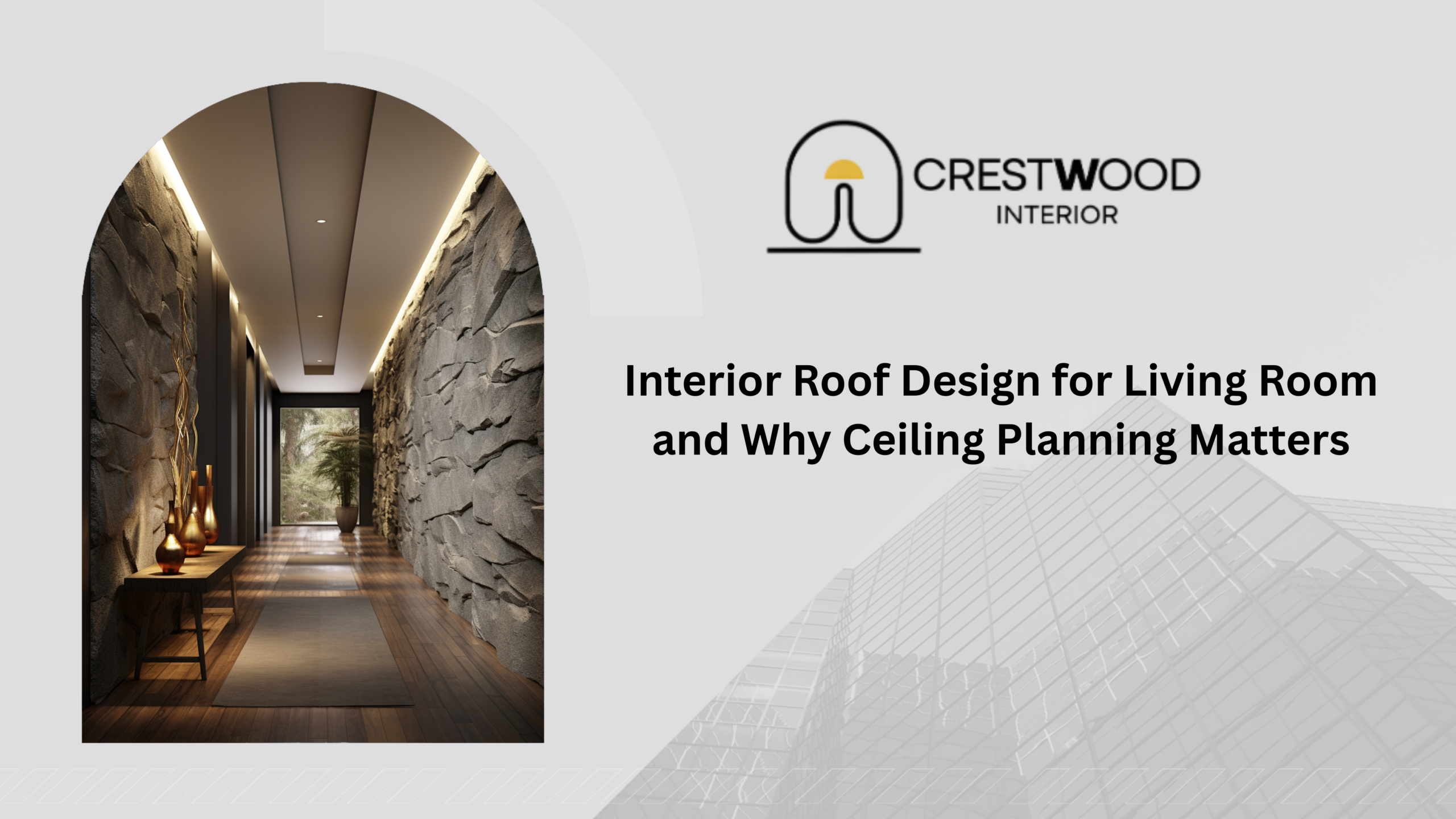
Interior Roof Design for Living Room: Why Ceiling Planning Matters for Comfort, Style & Energy Efficiency
Interior roof design for living room spaces plays a far more important role in home comfort and aesthetics than most homeowners realize.
When planning a living room renovation, your focus likely gravitates toward the walls, flooring, and furniture. These are the elements we interact with directly. The ceiling, however, is often an afterthought—a blank canvas simply there to cover the space above. This common oversight means missing a significant opportunity. Your living room ceiling is not just a structural necessity; it is a powerful, functional system that quietly dictates the comfort, performance, and overall wellbeing of your home.
This article explores why strategic interior roof design for your living room is one of the most crucial aspects of any home renovation. We will move beyond simple aesthetics and examine the ceiling through a lens of functionality. You will learn how it influences everything from your home’s temperature and your energy bills to the quality of light and sound you experience every day. It’s time to look up and recognize the ceiling as the unsung hero of home design.
How Interior Roof Design for Living Room Influences Daily Comfort
Comfort is more than just a plush sofa. It’s a holistic feeling of ease within a space, and your ceiling is a primary driver of this sensation. A well-considered interior roof design for the living room directly manages the physical environment, transforming it from a simple room into a sanctuary. It acts as a silent regulator of your home’s thermal and atmospheric conditions.
Heat Retention and Cooling Balance
Your ceiling plays a pivotal role in your home’s thermal dynamics. During colder months, heat naturally rises. A poorly insulated or designed ceiling allows that expensive warm air to escape, forcing your heating system to work overtime. Conversely, in the summer, an unoptimized ceiling can absorb and radiate heat from the attic or roof, turning your living room into an uncomfortable warm zone.
Strategic ceiling planning addresses this. Proper insulation, the use of specific materials, and even the creation of an air gap with a false ceiling can create an effective thermal barrier. This barrier keeps warm air in during the winter and blocks external heat during the summer. The result is a more stable and comfortable indoor temperature year-round, leading to significant reductions in heating and cooling costs.
Air Circulation Patterns
Air quality and circulation are fundamental to a healthy living environment. The design of your ceiling dictates how air moves throughout your living room. The placement of vents, the integration of ceiling fans, and the overall shape of the ceiling can either promote or hinder effective airflow.
For example, a vaulted ceiling can sometimes lead to stagnant air pooling at its peak. However, with thoughtful vent placement or a strategically located fan, this can be turned into an advantage, promoting a natural convection cycle that keeps the air fresh. Modern ceiling ideas often incorporate discreet, linear vents that integrate seamlessly while providing superior air distribution compared to traditional circular diffusers. Effective circulation prevents stuffiness, reduces airborne allergens, and maintains a consistent temperature from floor to ceiling.
The Psychological Effect of Ceiling Height
The height and shape of your ceiling have a measurable psychological impact. This isn’t just a matter of personal preference; it’s rooted in how our brains perceive space. High ceilings, typically those over nine feet, create a sense of openness, freedom, and even grandeur. They can make a room feel larger and more airy, which is often associated with creativity and abstract thinking.
Lower ceilings, on the other hand, foster a sense of coziness, intimacy, and protection. This can be ideal for creating a comfortable nook for reading or quiet conversation. A skilled designer can manipulate the perception of height. For instance, a coffered ceiling can add visual interest and a sense of scale to a large, high ceiling, while a tray ceiling can create a focal point and the illusion of height in a standard room. This psychological comfort is a key, yet often ignored, component of wellbeing at home. Research has even shown that indoor environmental comfort can improve cognitive performance and productivity by as much as 15–20%, a testament to how much our physical surroundings affect us.
How Ceiling Interior Design for Living Room Affects Light
Light is the single most important element in interior design, and the ceiling is its primary partner. The ceiling acts as the fifth wall, a vast surface that can either absorb, reflect, or diffuse light. An effective ceiling interior design for the living room doesn’t just hold light fixtures; it actively manages and sculpts both natural and artificial light to create a functional and inviting atmosphere.
Light Reflection and Shadow Zones
The color, texture, and finish of your ceiling determine its Light Reflectance Value (LRV). A smooth, white ceiling has a high LRV, meaning it will reflect a significant amount of light back into the room. This amplifies natural light from windows, making the space feel brighter and more open during the day and reducing the need for artificial lighting.
Conversely, a dark or heavily textured ceiling absorbs more light, which can create a dramatic, intimate mood but may also lead to “shadow zones”—dark corners or areas that feel unwelcoming. Poorly planned ceilings can cast unintentional shadows, disrupting the visual flow of the room. A thoughtful home interior ceiling design considers the angles of incoming light throughout the day to ensure even distribution and minimize harsh shadows.
Layered Lighting and Energy Efficiency
A truly well-lit room relies on layered lighting—a combination of ambient, task, and accent lighting. The ceiling is the foundation for this strategy.
- Ambient Lighting: This is the general, overall illumination of the room, often provided by recessed cans, a central fixture, or cove lighting integrated into the ceiling design.
- Task Lighting: This is focused light for specific activities, like reading. Pendants or track lighting directed from the ceiling are common solutions.
- Accent Lighting: This highlights architectural features or artwork, often using spotlights or wall-washers positioned in or on the ceiling.
By integrating these layers directly into the ceiling plan, you create a versatile lighting scheme that can adapt to any activity or mood. This intelligent design also enhances energy efficiency. By maximizing daylight reflection and using targeted, dimmable LED fixtures, you use less electricity to achieve better lighting, lowering your carbon footprint and your utility bills.
House Interior Ceiling Design and Its Role in Noise Control
In our increasingly busy and connected world, acoustic comfort is no longer a luxury—it’s a necessity. Your living room is a hub of sound, from movie nights and video calls to conversations with family. The surfaces in the room either reflect or absorb that sound, and the large, flat plane of the ceiling has the greatest potential to create unwanted echo and noise. A strategic house interior ceiling design is your first line of defense against poor acoustics.
Sound Absorption and Echo Reduction
Hard, flat surfaces like drywall or plaster reflect sound waves, causing them to bounce around the room. This creates reverberation and echo, which can make speech difficult to understand and turn up the volume on every little noise. This is especially problematic in modern homes with open-plan layouts and hard flooring.
Acoustic ceiling solutions directly counter this. Materials like acoustic ceiling tiles, wood fiber panels, or even stretched fabric systems are designed to absorb sound waves rather than reflect them. This immediately dampens echo and clarifies sound within the room. Modern ceiling ideas now include micro-perforated wood or drywall panels that offer a clean, minimalist look while providing excellent sound absorption.
Improving TV and Call Acoustics
The clarity of sound from your television or during a work-from-home video call is heavily dependent on room acoustics. If your voice or the audio from your speakers bounces off the ceiling, it creates a muddled, tinny sound that lacks depth and clarity. By incorporating sound-absorbing elements into your ceiling design, you create an acoustically “softer” environment. This allows for clearer dialogue from your entertainment system and ensures you sound professional and easy to understand during important calls.
For those living in apartments or multi-story houses, the ceiling also plays a crucial role in noise insulation. Acoustic insulation installed within the ceiling cavity can drastically reduce impact noise (like footsteps from above) and airborne noise (like conversations or music). This solves a hidden but significant pain point, restoring peace and quiet to your personal space.
Modern Ceiling Ideas That Support Minimalist Interiors
Minimalism is more than an aesthetic; it’s a philosophy centered on simplicity, intention, and the removal of the superfluous. A successful minimalist interior is not about emptiness, but about creating a sense of calm and order. The ceiling is fundamental to achieving this, acting as a unifying element that promotes visual tranquility. Modern ceiling ideas for minimalist interiors focus on clean lines and seamless integration.
Clean Profiles and Hidden Services
In minimalist design, visual clutter is the enemy. Ornate fixtures, complex trim, and visible utilities detract from the serene atmosphere. A key strategy in minimalist ceiling design is to hide the services. This involves planning the ceiling to conceal wiring for lights, speakers, projectors, and even automated blinds. Vents for air conditioning can be replaced with slim, linear diffuses that blend into a seam.
The goal is to create a smooth, uninterrupted plane. This can be achieved with a perfectly finished flat ceiling or by using a suspended ceiling system with clean, flush panels. The absence of visual noise overhead allows the eye to rest and contributes to an overall feeling of calm.
Seamless Transitions and Visual Calm
A minimalist ceiling doesn’t draw attention to itself. Instead, it creates seamless transitions to the walls. Techniques like a “reveal,” a small, recessed channel where the wall meets the ceiling, can create a crisp, modern line that is more subtle than traditional crown molding. This detail reinforces the clean geometry of the space.
The ultimate goal is to create visual calm. An over-designed or cluttered ceiling creates visual tension, constantly pulling your attention upward. A well-executed minimalist ceiling does the opposite. It becomes a quiet, expansive backdrop that enhances the sense of space and allows the carefully chosen furniture and artwork in the room to take center stage. This thoughtful approach turns the ceiling from a forgotten surface into an active contributor to the home’s peaceful ambiance.
How the Best Colour Combination for Home Starts from the Ceiling
Color is one of the most powerful tools in an interior designer’s arsenal, capable of transforming the mood and perception of a space. While homeowners spend weeks agonizing over wall colors, the ceiling color is often an automatic choice: standard white. However, the best colour combination for your home is an integrated palette, and that integration must start from the top down. The ceiling color sets the tone for the entire room.
Ceiling Color Psychology and Room Expansion
The long-held belief that a white ceiling makes a room feel bigger is only partially true. While light colors do recede and create a sense of spaciousness, the right color can achieve more nuanced effects. Painting a ceiling a very light shade of the wall color, for instance, can blur the boundaries between wall and ceiling, creating a cohesive, enveloping feel that can make a room feel larger and more unified.
Conversely, a darker ceiling can add drama, intimacy, and sophistication, making a large, impersonal room feel cozier and more grounded. In a room with very high ceilings, a darker color can visually lower the ceiling to a more human scale. Understanding this color psychology allows you to manipulate the perceived dimensions of your living room.
Light-Temperature Harmony and Durability
The color of your ceiling also interacts with the color temperature of your lighting. A cool-toned white ceiling paired with warm-toned LED lights can result in a space that feels sterile or mismatched. Harmonizing the ceiling’s undertones with your lighting choices is critical. A slightly warm off-white ceiling, for example, will beautifully complement the cozy glow of 2700K lighting.
Furthermore, the quality of the paint matters immensely. Ceilings are susceptible to yellowing over time, especially in homes with kitchens that open into the living area or in households with smokers. Using high-quality, durable paints specifically formulated for ceilings will resist fading and staining, ensuring your chosen color remains true for years to come. A proper home interior ceiling design plan includes specifications for not just the color, but the type and finish of the paint to guarantee longevity.
How Professional Interior Designers Integrate Ceiling Design with Furniture Layout
A truly masterful living room design is one where every element works in concert. It’s a cohesive system, not just a collection of nice things. Professional interior designers know that the ceiling plan and the furniture layout are not two separate steps; they are intrinsically linked and must be planned simultaneously. The ceiling should reinforce and define the functions of the space below it.
Alignment with Seating Zones and Activity Areas
Your living room is not a single-use space. It has distinct zones: the main seating area for conversation, a corner for reading, the area focused on the television, and pathways for circulation. An intelligent ceiling interior design for the living room mirrors this layout.
For example, a dropped soffit or a tray ceiling can be used to define the primary seating area, creating a more intimate “room within a room.” A beautiful pendant light might be centered over the coffee table, anchoring the conversational group. Recessed spotlights might be positioned to illuminate a bookshelf in the reading nook. This alignment creates a visual and functional logic, guiding how the space is used and making it feel intentional and well-ordered.
Fan–Light–TV Coordination
Without a coordinated plan, functional elements can end up in conflict. A common mistake is placing a ceiling fan too close to a downlight, creating a distracting strobe effect. Another is hanging a pendant light where it obstructs the view of the television from a key seating position.
A professional plan accounts for these relationships from the start. It maps out sightlines, clearance heights, and the spread of light from each fixture. This ensures that your ceiling fan cools you without causing a light show, your statement chandelier doesn’t block the movie, and your task lighting illuminates your book, not the back of your head. This level of coordination is the hallmark of a thoughtfully executed design. This is where the logic of a false ceiling versus an open ceiling is debated, weighing aesthetic goals against the practical needs of housing these integrated systems.
Interior Roof Design Mistakes That Increase Maintenance Over Time
A beautiful living room should be a source of joy, not a source of constant upkeep and worry. Some of the most frustrating and costly home maintenance issues originate from poor ceiling design and execution. A forward-thinking interior roof design for the living room is not just about how it looks on day one, but how it performs over a decade. Planning ahead helps prevent future regret.
Moisture Traps and Sagging Structures
Moisture is the enemy of any building material. Ceilings in humid climates or those with poorly insulated attics above them can become breeding grounds for mold and mildew. Complex ceiling designs with many unventilated nooks and crannies can create “moisture traps.” A proper design ensures adequate ventilation paths and specifies moisture-resistant materials, like green board drywall, in susceptible areas.
The structural integrity of your ceiling is also paramount. An elaborate false ceiling or the addition of heavy fixtures puts significant weight on the structure. Using subpar materials for the framework or hiring an unqualified contractor can lead to sagging, cracking, or, in the worst-case scenario, partial collapse over time. A professional design includes structural specifications to ensure the ceiling is built to last.
Wiring Access and Dust Accumulation
Modern ceilings are complex, housing wiring for lights, speakers, internet, and more. A shortsighted design can make accessing this wiring for future upgrades or repairs a nightmare, potentially requiring you to tear down a portion of the finished ceiling. A smart design incorporates access panels that are discreetly integrated into the aesthetic, saving you massive headaches down the road.
Finally, consider the practical matter of cleaning. Intricate, ornate ceiling designs with many ledges, ridges, and crevices can become magnets for dust and cobwebs, creating a constant cleaning chore. A design that prioritizes clean lines and smooth surfaces is not only aligned with modern aesthetics but is also far easier to maintain, contributing to better indoor air quality and saving you time and effort. This is a critical consideration in any home renovation.
How Ceiling Planning Adds Long-Term Value During a Home Renovation
A home renovation is a significant investment, and every decision should be weighed against its potential return. While a fresh coat of paint is a simple upgrade, a comprehensive ceiling plan is a strategic investment that adds tangible, long-term value to your property. It’s a feature that pays dividends in comfort, efficiency, and eventual resale appeal.
Resale Appeal and Adaptability
Potential homebuyers notice thoughtful details. A living room with a well-designed ceiling that enhances light, manages acoustics, and feels architecturally integrated stands out from the competition. It signals a high-quality, well-maintained home. Features like integrated lighting, clean lines, and a sense of spaciousness created by the ceiling design can be major selling points that increase your home’s market value.
Furthermore, a well-planned ceiling is an adaptable one. By including extra conduit for future wiring or designing a system that can easily accommodate new lighting technologies, you future-proof your living room. This adaptability means the space can evolve with your needs and with technological advancements without requiring another major renovation.
Upgrade Compatibility and Energy Savings
Technology is constantly changing. The smart home of today will look different from the smart home of tomorrow. A ceiling plan that considers upgrade compatibility—for example, by ensuring easy access to power sources for future automated systems or integrated projectors—adds significant functional value.
Perhaps the most direct financial return comes from energy savings. As discussed, a ceiling designed for thermal efficiency and optimal light reflection will lower your utility bills every single month. Over the lifespan of a mortgage, these savings can amount to thousands of dollars. This makes a well-planned ceiling not just an aesthetic choice, but a financially savvy one. When planning a home renovation, incorporating modern ceiling ideas is an investment in your home’s future performance and value.
Choosing the Right Ceiling Design Partner for Your Living Room
Understanding the importance of ceiling design is the first step. The second, and more critical, step is finding the right partner to bring that vision to life. The difference between a flawless execution and a costly failure lies in the expertise, process, and capability of the team you hire. The choice of interior designers or renovation contractors will define the outcome of your project.
The Evaluation Checklist
When evaluating a potential partner, look beyond their portfolio of pretty pictures. You need a team that understands the technical and functional aspects of ceiling design. Your checklist should include:
- Functional Expertise: Do they talk about acoustics, lighting layers, and thermal performance? Or just aesthetics?
- Technical Knowledge: Do they understand structural loads, ventilation requirements, and material science?
- Integrated Process: Do they plan the ceiling, lighting, and furniture layout as a single, cohesive system?
Documentation and Execution
A professional firm operates on precision. Insist on detailed documentation, including scaled drawings, lighting plans, and material specifications. This documentation is your contract and your guarantee that what was promised is what will be delivered. Vague plans lead to ambiguous results.
Finally, verify their execution capability. Ask to speak with past clients. Inquire about their project management process and how they handle challenges. For a project as integral as a living room ceiling, especially one supporting minimalist interiors or complex integrations, you need a partner with a proven track record of excellence. Choosing a firm like Casterwood Interiors, which prioritizes the crucial interplay between comfort, performance, and wellbeing, ensures your investment is in capable hands.
Conclusion: Elevate Your Living Room by Looking Up
The ceiling is far more than the upper boundary of your living room. It is a dynamic system that actively shapes your daily experience. From the thermal comfort you feel and the quality of light you read by, to the clarity of sound during a family movie night and the overall sense of peace in your home, the ceiling is a silent but powerful force.
By shifting your perspective and viewing the interior roof design for your living room as essential infrastructure, you unlock its potential to enhance your quality of life. A thoughtful, professionally executed ceiling plan is an investment in lasting comfort, superior performance, and the long-term value of your home. It’s time to give your ceiling the attention it deserves.
Related Questions About Showroom Interior Design
1. Why is interior roof design for the living room important in modern homes?
Interior roof design for the living room is important because it directly influences comfort, energy efficiency, lighting quality, and overall wellbeing. A well-planned ceiling regulates temperature by preventing heat loss in winter and reducing heat gain in summer. It also improves air circulation and minimizes noise disturbances. Beyond functionality, the ceiling shapes how spacious, cozy, or luxurious a living room feels. Modern homes rely on integrated systems for lighting, acoustics, and ventilation, and the ceiling acts as the foundation for these systems. When designed strategically, it transforms the living room into a balanced, efficient, and emotionally comfortable space rather than just a visually appealing area.
2. How does ceiling design affect temperature and energy consumption?
Ceiling design plays a crucial role in managing indoor temperature and energy usage. Heat naturally rises, and without proper insulation, it escapes through the roof, increasing heating costs in winter. In summer, poorly designed ceilings allow heat from the roof to enter the living space, raising cooling expenses. False ceilings, thermal insulation layers, and air gaps create effective barriers that stabilize indoor temperatures. Reflective materials can reduce heat absorption, while ventilated cavities improve airflow. These design strategies help HVAC systems operate efficiently, reducing electricity bills and environmental impact. Over time, energy-efficient ceiling planning results in significant financial savings and improved comfort.
3. In what ways does ceiling design influence lighting in the living room?
Ceiling design plays a crucial role in managing indoor temperature and energy usage. Heat naturally rises, and without proper insulation, it escapes through the roof, increasing heating costs in winter. In summer, poorly designed ceilings allow heat from the roof to enter the living space, raising cooling expenses. False ceilings, thermal insulation layers, and air gaps create effective barriers that stabilize indoor temperatures. Reflective materials can reduce heat absorption, while ventilated cavities improve airflow. These design strategies help HVAC systems operate efficiently, reducing electricity bills and environmental impact. Over time, energy-efficient ceiling planning results in significant financial savings and improved comfort.
4. How does interior ceiling design improve acoustic comfort?
Interior ceiling design significantly improves sound quality by reducing echo and noise transmission. Flat, hard ceilings reflect sound waves, causing reverberation and speech distortion. Acoustic panels, perforated boards, fabric systems, and insulated cavities absorb sound and soften acoustics. These features are especially important in open-plan homes and apartments. Soundproof insulation within ceiling layers reduces noise from upper floors and neighboring spaces. Improved acoustics enhance television sound clarity, conversation quality, and work-from-home calls. By controlling sound reflections and vibrations, ceiling design creates a calmer, more peaceful living environment suitable for relaxation and social interaction.
5. Why are modern ceiling ideas essential for minimalist interiors?
Modern ceiling ideas are essential for minimalist interiors because they maintain visual simplicity and spatial harmony. Minimalism focuses on reducing clutter and emphasizing quality over quantity. Clean ceiling profiles, hidden wiring, concealed vents, and flush lighting fixtures support this philosophy. Seamless transitions between walls and ceilings create uninterrupted surfaces that promote calmness. Minimalist ceilings avoid decorative excess and instead highlight proportion, symmetry, and material quality. Integrated lighting and concealed services prevent visual distractions. This design approach allows furniture and décor to stand out while maintaining serenity. A well-executed minimalist ceiling enhances elegance, order, and mental relaxation.
6. How does ceiling color impact the overall look and feel of a living room?
Ceiling color strongly influences spatial perception and emotional response. Light shades create openness and reflect more light, making rooms feel larger and brighter. Slightly tinted ceilings can unify wall and ceiling surfaces for visual continuity. Dark ceilings add depth, intimacy, and luxury, especially in large spaces. Color also interacts with lighting temperature, affecting warmth and ambiance. Harmonizing ceiling paint with LED lighting prevents visual imbalance. High-quality ceiling paints resist yellowing and staining, maintaining long-term aesthetics. Strategic color selection allows homeowners to manipulate scale, mood, and comfort while reinforcing the home’s design theme.
7. Why should ceiling design be planned together with furniture layout?
Ceiling design must align with furniture layout to ensure visual balance and functional efficiency. Living rooms contain multiple zones for seating, entertainment, reading, and circulation. Ceiling features such as soffits, trays, and lighting arrangements should correspond to these zones. Pendant lights can anchor seating areas, while spotlights can highlight bookshelves or artwork. Coordinated planning prevents conflicts between fans, lights, and televisions. It also ensures proper sightlines and illumination. Integrated design enhances usability, prevents awkward placements, and creates a logical spatial flow. This coordination reflects professional planning and improves daily living comfort.
8. What are the most common ceiling design mistakes homeowners make?
Common ceiling design mistakes include poor insulation, inadequate ventilation, weak structural frameworks, and inaccessible wiring systems. These issues lead to moisture buildup, mold growth, sagging structures, and frequent repairs. Overly complex designs often trap dust and require constant cleaning. Another major mistake is ignoring access panels, making maintenance difficult. Using low-quality materials increases long-term costs. Improper lighting placement causes glare and shadow zones. These errors reduce durability and comfort. A professional design approach focuses on longevity, accessibility, and simplicity, preventing future problems and ensuring the ceiling performs reliably over time.
9. How does ceiling planning increase long-term property value?
Ceiling planning increases property value by improving functionality, efficiency, and visual appeal. Buyers recognize well-designed ceilings as indicators of quality construction. Integrated lighting, sound control, and thermal insulation enhance comfort and usability. Energy-efficient ceilings reduce long-term utility costs, making homes more attractive. Adaptable designs support future upgrades and smart home systems. Clean architectural detailing elevates interior aesthetics. These features differentiate a property in competitive markets. Over time, a professionally designed ceiling contributes to higher resale value, faster sales, and stronger buyer confidence.
10. How can homeowners choose the right professional for ceiling design projects?
Choosing the right professional requires evaluating technical expertise, design process, and execution quality. Homeowners should review portfolios for functional and aesthetic diversity. Designers must understand acoustics, lighting systems, ventilation, and structural requirements. Integrated planning methods are essential. Detailed documentation, including drawings and specifications, ensures transparency. Client testimonials and past project reviews reveal reliability. Strong project management and communication skills are critical. A competent partner prioritizes comfort, performance, and long-term value rather than short-term visuals. Selecting an experienced interior design firm ensures successful implementation and protects renovation investment.