
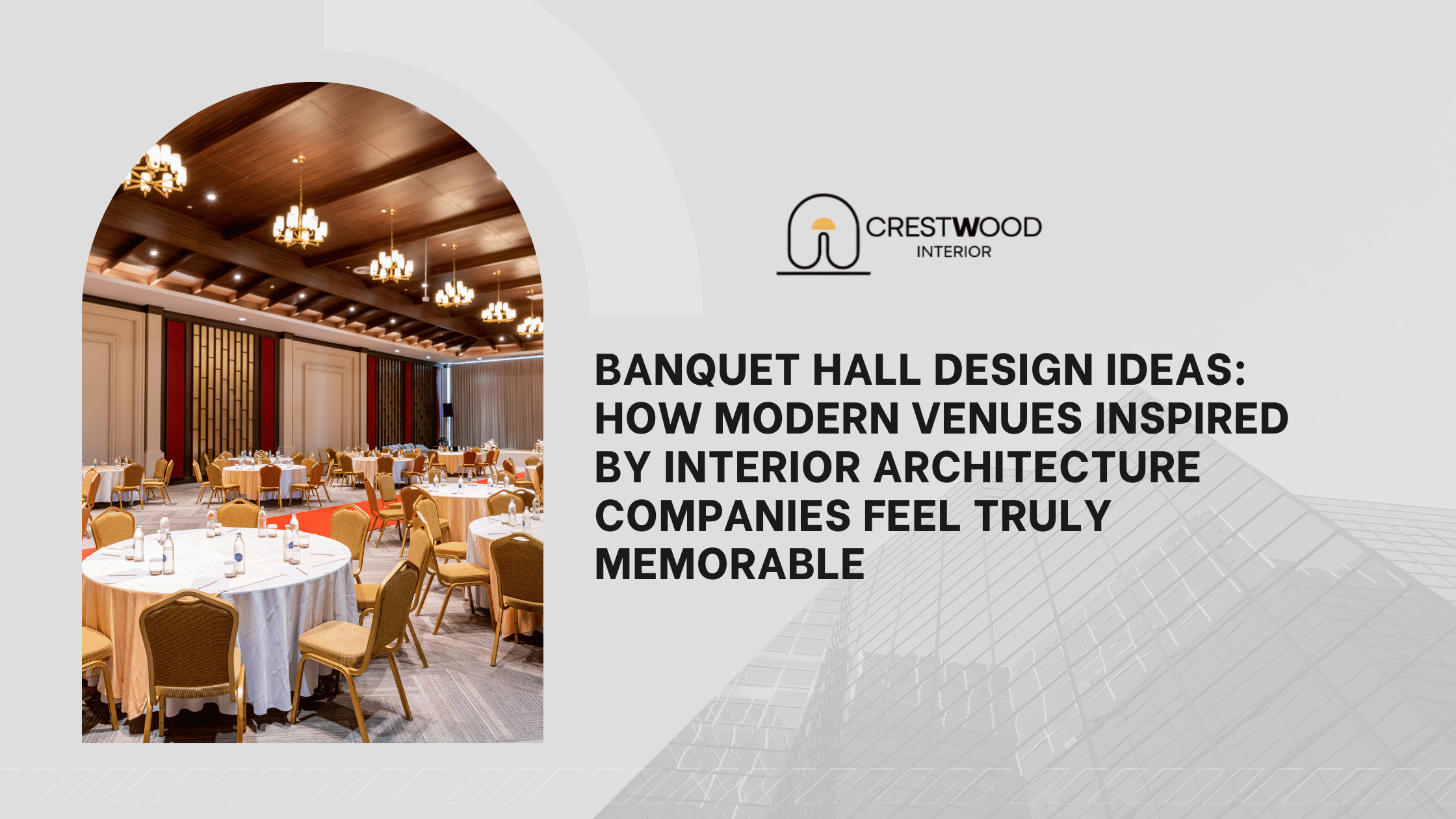
Banquet Hall Design Ideas: How Modern Venues Inspired by Interior Architecture
Introduction: Redefining Banquet Hall Design in 2026
Banquet halls have evolved far beyond simple event spaces. In 2026, they are immersive environments designed to create unforgettable experiences. Whether it’s a wedding, corporate gala, or milestone celebration, the venue plays a pivotal role in shaping the event’s success.
Modern banquet hall design ideas focus on more than just aesthetics—they prioritize functionality, guest experience, and long-term value. Inspired by the expertise of interior architecture companies, these designs integrate spatial planning, advanced materials, and innovative lighting to craft spaces that are as practical as they are beautiful.
This blog explores the latest trends and strategies in banquet hall design, offering insights for venue owners, hospitality planners, and anyone looking to create a truly memorable space.
Why Banquet Hall Design Ideas in 2026 Are About Experience, Not Decoration
In the past, banquet hall design was often limited to surface-level décor—fancy chandeliers, ornate carpets, and lavish table settings. While these elements still matter, the focus has shifted to creating holistic experiences. Today’s guests expect more than just a visually appealing venue; they want a space that feels welcoming, functional, and memorable.
Key Elements of Experience-Driven Design:
- Immersive Atmosphere: Lighting, sound, and scent work together to create a multi-sensory experience.
- Functional Layouts: Spaces are designed to facilitate smooth guest movement and efficient service.
- Personalization: Venues offer customizable elements to reflect the unique identity of each event.
Case Study: Transforming Guest Experiences with Design Thinking
A banquet hall in Mumbai recently revamped its design using experience-driven principles. By incorporating layered lighting, acoustic panels, and modular furniture, the venue saw a 40% increase in bookings for high-end events. Guests praised the seamless flow and luxurious ambiance, proving that design as experience engineering is the future.
This shift from decoration to experience engineering sets a new baseline for banquet hall design, ensuring that every detail contributes to the overall impact.
How Interior Architecture Companies Approach Banquet Hall Design Differently
Interior architecture companies bring a level of expertise that goes beyond traditional interior design. Their approach is rooted in architectural principles, ensuring that every aspect of the space is thoughtfully planned and executed. Here’s how they stand out:
- Spatial Planning: Interior architecture companies prioritize the flow of the space, ensuring that guests can move seamlessly between different areas. For example, the placement of entryways, dining zones, and stages is carefully considered to avoid bottlenecks and enhance the guest experience.
- Structural Coordination: Modern banquet halls are complex spaces that require the integration of HVAC systems, lighting, acoustics, and more. Interior architecture companies excel at coordinating these elements, ensuring that the functional aspects of the space do not compromise its aesthetic appeal.
- Design Philosophy: These firms adopt a design-thinking approach, focusing on the needs of the end-users. This human-centric methodology ensures that every design decision is backed by logic and data, resulting in spaces that are both beautiful and practical.
Pro Tip for Venue Owners: When hiring an interior architecture company, ask about their process for integrating structural elements like HVAC and lighting. A well-coordinated design ensures a flawless guest experience.
Spatial Flow: The Core of Memorable Banquet Hall Design Ideas
One of the most critical aspects of banquet hall design is spatial flow. A well-designed space ensures that guests can move effortlessly while maintaining a sense of grandeur. Here’s a closer look at the key components of spatial flow:
- Entry Flow: The entrance sets the tone for the entire event. A grand, welcoming entryway creates a positive first impression and sets the stage for what’s to come.
- Guest Movement: Clear pathways between dining areas, stages, and restrooms are essential for a smooth guest experience. Strategic placement of furniture and décor can guide movement without feeling restrictive.
- Stage Orientation: The stage is often the focal point of a banquet hall, whether it’s for speeches, performances, or ceremonies. Proper orientation ensures that all guests have a clear view, enhancing their engagement.
- Service Circulation: Behind the scenes, staff need discreet routes to deliver food, clear tables, and manage other logistics. Separate service pathways ensure that operations run smoothly without disrupting the guest experience.
Infographic Idea: Create a visual guide showing the ideal spatial flow for a banquet hall, including entry points, guest zones, and service pathways.
Small Party Hall Interior Design Ideas That Feel Grand, Not Cramped
Designing a small party hall to feel spacious and grand is a challenge, but it’s far from impossible. With the right strategies, even compact spaces can exude elegance and sophistication. Here’s how:
- Vertical Design: High ceilings and vertical elements, such as tall drapes or floor-to-ceiling mirrors, create an illusion of space and grandeur.
- Strategic Lighting: Layered lighting, including ambient, task, and accent lighting, can make a small space feel larger and more inviting.
- Minimalist Décor: Avoid overcrowding the space with excessive furniture or decorations. Instead, focus on a few statement pieces that draw attention without overwhelming the room.
- Multi-Functional Furniture: Opt for furniture that serves multiple purposes, such as foldable tables or seating with built-in storage. This maximizes utility without adding clutter.
Example: A small party hall in Hyderabad used vertical greenery walls and reflective surfaces to create a sense of openness. Guests were amazed at how spacious the venue felt despite its compact size.
What Banquet Halls Can Learn from Showroom Interior Design
Showroom interior design offers valuable lessons for banquet halls, particularly in the areas of lighting, zoning, and focal points. Retail spaces are designed to captivate and guide customers, and these principles can be applied to event venues. Here’s how:
- Lighting: Showrooms use layered lighting to highlight products and create ambiance. Banquet halls can adopt a similar approach, using spotlights to draw attention to key areas like the stage or dining tables.
- Zoning: Retail spaces are divided into zones to guide customer movement. Banquet halls can use zoning to create distinct areas for dining, dancing, and mingling, ensuring a seamless flow.
- Focal Points: Showrooms often feature eye-catching displays to draw customers in. Banquet halls can incorporate statement pieces, such as chandeliers or feature walls, to create a sense of drama and elegance.
- Pro Tip: Use lighting to create focal points that guide guests’ attention, such as a beautifully lit stage or a dramatic centerpiece.
The Role of Creative Interior Designers in Hyderabad’s Banquet Evolution
Hyderabad has emerged as a hub for innovative banquet hall designs, thanks to its talented pool of creative interior designers. These professionals bring a unique blend of traditional aesthetics and modern functionality to their projects, making the city’s venues stand out.
Key Contributions of Hyderabad’s Interior Designers:
- Local Craftsmanship: Incorporating traditional elements, such as hand-carved woodwork or intricate tile patterns, adds a touch of cultural authenticity.
- Modern Technology: Leveraging smart lighting, automated climate control, and other technologies enhances the guest experience.
- Sustainability: Many designers in Hyderabad prioritize eco-friendly materials and practices, aligning with global trends in sustainable design.
Materials, Lighting, and Ceiling Strategy That Define Modern Banquet Halls
The choice of materials, lighting, and ceiling design can make or break a banquet hall. Here’s what modern venues prioritize:
- Materials: Durable, sustainable options like engineered wood, natural stone, and recycled metals are popular choices. These materials not only look great but also stand the test of time.
- Lighting: A mix of ambient, task, and accent lighting creates depth and drama. For example, LED strips can highlight architectural features, while chandeliers add a touch of elegance.
- Ceilings: Statement ceilings with intricate designs, bold colors, or unique textures add character to the space. Acoustic panels can also be integrated to enhance sound quality.
Evaluating Banquet Hall Design Ideas Without Being a Design Expert
Not everyone is a design expert, but evaluating banquet hall design ideas doesn’t have to be intimidating. Here are some key criteria to consider:
- Functionality: Does the layout support the event’s needs?
- Aesthetics: Is the design visually appealing and aligned with your brand?
- Durability: Are the materials and finishes built to last?
- Guest Experience: Will the space make guests feel comfortable and inspired?
- Sustainability: Does the design incorporate eco-friendly practices and materials?
Conclusion: Transforming Banquet Halls into Memorable Venues
Banquet hall design ideas in 2026 are all about creating experiences that guests will remember. By partnering with interior architecture companies and focusing on spatial flow, materials, and lighting, venue owners can elevate their spaces to new heights. Whether you’re designing a small party hall or a grand banquet venue, the key is to think beyond decoration and embrace design as a tool for storytelling.
Call-to-Action:
Ready to bring your banquet hall vision to life? Partner with creative interior designers who understand the art of experience engineering. Contact us today.