
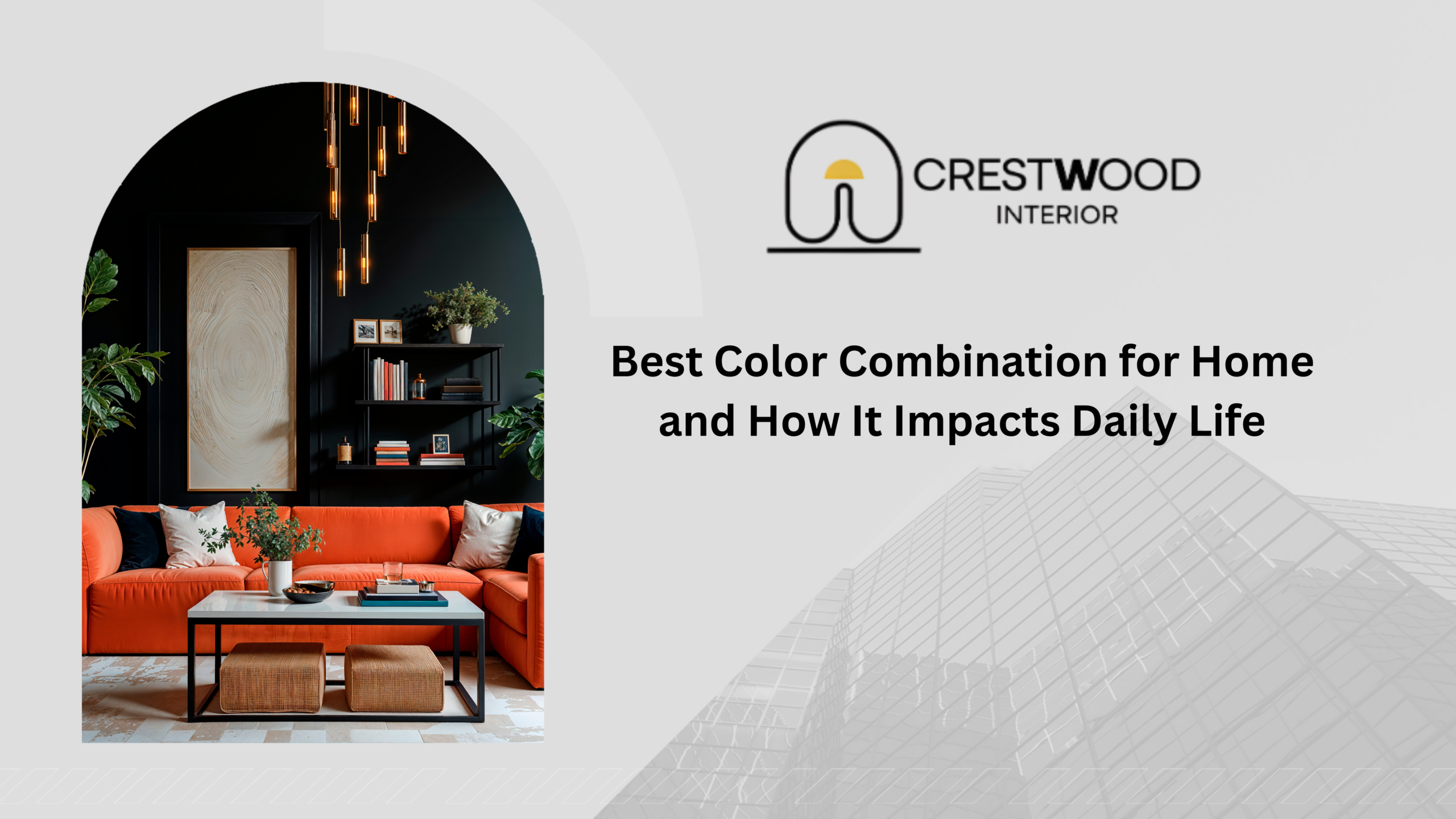
Best Color Combination for Home and How It Impacts Daily Life
When you think about painting your home, the first question is usually, “What looks good?” It’s a natural starting point. We scroll through social media, pin images of stunning modern interiors, and try to imagine those shades on our own walls. But there is a far more critical question that often goes unasked: “How will this colour make me feel and function?”
The best colour combination for home design is not just about aesthetics; it is a fundamental lifestyle decision. Recent studies in environmental psychology and neuro-architecture reveal that our visual environment has a direct, measurable impact on our biology. The colours surrounding us influence our stress levels, sleep quality, cognitive focus, and even our family interactions. Your walls are not just a backdrop; they are active participants in your daily life.
This article moves beyond the superficial layer of trends and “colors of the year.” Instead, we will explore the science of color through a behavioral lens. We will examine how the right choices can lower cortisol, improve sleep cycles, and create a home that supports your mental and physical wellbeing in 2026 and beyond.
Why the Best Color Combination for Home Is a Lifestyle Decision Today
In the past, home decor was often treated as a static element—something you finished and then lived with. Today, however, our homes have evolved into multi-functional hubs. They are offices, classrooms, gyms, and sanctuaries all rolled into one. This shift has turned our living spaces into intense “mental environments,” where the visual input we receive constantly affects our brain’s processing power.
Research from institutions like the American Psychological Association (APA) and Harvard Health highlights a crucial link between our environment and our physiological state. When we talk about the best colour combination for home interiors, we are really talking about managing our neurochemistry.
The Cortisol Connection
One of the most significant findings in environmental psychology is the relationship between colour and cortisol, the body’s primary stress hormone. High-contrast, chaotic, or overly saturated colour schemes can trigger a low-level “fight or flight” response. While you might not feel consciously panicked, your body registers the visual noise as stress, leading to elevated cortisol levels over time. This chronic background stress can manifest as irritability, fatigue, or an inability to unwind after work.
Attention Span and Emotional Stability
Conversely, specific colour palettes have been shown to support cognitive function. In an era of constant digital distraction, our attention spans are fragmented. Modern interiors that utilize coherent, scientifically backed colour strategies can act as a “cognitive cradle,” reducing visual load and allowing the brain to recover. Emotional stability is often higher in homes where color transitions are smooth rather than jarring, providing a sense of predictability and safety that the subconscious mind craves.
Choosing a color palette is no longer just about matching the sofa; it is about engineering a lifestyle that prioritizes mental health and sustained energy.
Why Design Starts With Removing, Not Adding
The journey to a minimalist home starts with a process of intentional subtraction. Before considering what to add, the first step is to evaluate what can be removed. This isn’t just about decluttering possessions; it’s about stripping away visual noise, unnecessary architectural details, and anything that obstructs light and movement.
This act of removing is powerful. It forces you to define what is truly essential for your lifestyle. By eliminating distractions, you create a clean canvas. This allows the inherent qualities of the space—its volume, light, and structure—to become the main features. The goal is to create a home that feels open and effortless, and that sense of freedom is achieved by what you choose to leave out, not by what you put in.
Redefining “Best Home Interior”
In a minimalist context, the definition of the “best home interior” changes significantly. It moves away from traditional markers of luxury, such as expensive ornamentation or a collection of designer objects. Instead, “best” is redefined as a measure of ease, flow, and the absence of friction in daily life.
Is the home easy to clean and maintain? Can you move through it without obstruction? Does the space adapt to your changing needs? Does it provide a sense of mental calm at the end of a busy day? In 2026, the ultimate luxury is a home that supports your well-being by removing complexity.
How Wall Color Ideas Influence Mood, Energy, and Sleep Cycles
We often describe colours in emotional terms—”cheerful yellow” or “moody blue.” But these descriptions are rooted in biological reality. Different wavelengths of light (which we perceive as colour) stimulate different responses in the brain’s hypothalamus, which governs our sleep-wake cycles, appetite, and body temperature.
The Biology of Blue and Green
If sleep restoration is a priority, cool tones are your physiological allies. Research consistently shows that blue and green wavelengths are the most restful for the human eye to process. Because the lens of the eye focuses green light directly on the retina, it strains the eye muscles less than other colours.
Furthermore, these cool tones have a measurable sedative effect. Exposure to soft blues and greens has been linked to lowered blood pressure and a reduced heart rate. This makes them the ideal wall colour ideas for bedrooms and bathrooms, where the goal is to signal to the body that it is time to decompress.
Cognitive Calm: The Power of Beige and Greige
For shared living spaces and home offices, extreme colours can be counterproductive. This is where the resurgence of “greige” (a blend of grey and beige) finds its scientific footing. These neutral tones are low-arousal colours. They don’t demand attention, which frees up mental bandwidth for conversation, work, or reading. They provide a backdrop of “cognitive calm,” reducing visual stimulation so you can focus on the task at hand without subconscious distraction.
Yellow and Red: Alertness with Caution
Warm colours like yellow and red are high-arousal. They effectively increase alertness and energy, making them suitable for active zones like a kitchen or a dining room where lively conversation is encouraged. However, caution is required. Overuse of intense yellow has been linked to anxiety and short tempers in some studies. Darker, moodier tones can add emotional weight and sophistication, but if used without adequate lighting, they can suppress melatonin production at the wrong times, disrupting circadian rhythms.
Get a personalized color–mood assessment. Understanding your family’s specific emotional and energetic needs is the first step to a healthier home.
Why Best Home Interior Planning Starts with Lighting Effects
You cannot choose a paint colour in a vacuum. Colour is, quite literally, reflected light. Without light, colour does not exist. Therefore, the best home interior planning treats paint and lighting as two halves of the same whole. A colour that looks serene in a showroom can turn sickly or oppressive in your living room if the lighting conditions aren’t considered.
Understanding Light Reflectance Value (LRV)
Every paint colour has a Light Reflectance Value (LRV), a measurement from 0 (absolute black) to 100 (pure white) that indicates how much light a colour reflects. Architects and lighting designers use LRV to ensure rooms have adequate illumination.
In a room with small windows or north-facing light, choosing a colour with a low LRV (like navy or charcoal) will suck the light out of the room, requiring significantly more artificial lighting to make the space usable. This isn’t just an aesthetic issue; it’s an energy efficiency one. A wall colour with a higher LRV bounces light deeper into the room, reducing the need for electric lights during the day and creating a brighter, more energetic atmosphere naturally.
Daylight vs. LED Behaviour: The Metamerism Effect
Colours are chameleons. The phenomenon known as metamerism describes how a colour changes appearance under different light sources. Natural daylight changes temperature throughout the day—cool and blue in the morning, warm and golden in the evening.
Furthermore, the artificial lighting you choose—specifically the Color Rendering Index (CRI) of your LED bulbs—drastically alters your walls. A standard LED might have a low CRI, making rich reds look muddy or warm creams look yellow. The best color combination for home interiors accounts for this shift, selecting shades that maintain their integrity whether it’s 8:00 AM sunlight or 8:00 PM lamp light.
Minimalist House Interior Design and Color Balance Science
Minimalism is often misunderstood as simply “painting everything white.” In reality, true minimalist house interior design is a sophisticated exercise in balance and sensory reduction. It draws heavily from Scandinavian and Japanese design principles (like Japandi), which prioritize the elimination of non-essential noise to promote mental clarity.
The Risk of White Overstimulation
While white is a staple of modern interiors, it is not neutral in its effect. An all-white room with high-gloss finishes can cause “snow blindness” or glare, which is physically tiring for the eyes. In a high-sunlight environment, pure white reflects so much intensity that it can trigger headaches and eye strain.
Warm Minimalism and Neuro-Aesthetics
The shift towards “warm minimalism” is a direct response to this. It utilizes off-whites, soft clays, and natural wood tones to create a space that feels clean but not sterile. From a neuro-aesthetic perspective, this approach is superior. It offers the visual simplicity required to lower stress but retains enough textural and tonal variety to feel welcoming. The goal is to create a “soft landing” for the eyes—a space where the brain doesn’t have to work hard to process the environment, allowing for deep relaxation.
Consult our minimalist color planning team. Achieve the perfect balance between clean lines and cozy living with expert guidance.
Vaastu Colors vs Environmental Psychology: Where Science Meets Tradition
In many cultures, specifically in India, Vastu Shastra plays a massive role in home design. Critics often dismiss it as superstition, but when we overlay Vastu principles with modern environmental psychology, we find surprising overlaps. The best colour combination for home design often respects both tradition and science.
Direction-Based Light Studies
Vastu recommends specific colours based on the direction a room faces. For example, it suggests lighter, brighter colours for the north and east. Scientifically, this aligns perfectly with solar geometry. North and east-facing rooms receive cooler, indirect morning light. Warm or light colours help balance this cool light, preventing the room from feeling gloomy.
Interpreting Red and Fire
Vastu associates the southeast with fire and recommends red or orange accents. While you might not want a fire-engine red kitchen, psychology agrees that warm colours in food preparation areas stimulate appetite and digestion (the “digestive fire”).
Where friction occurs is often in rigid interpretation. A Vastu consultant might suggest a specific green for a bedroom that clashes with the occupant’s personal psychological preference or the room’s lighting. A balanced approach prioritizes the occupant’s mental wellbeing. If a “lucky” color causes you visual stress, it is not lucky. The modern approach is to find the intersection—using the tones of the recommended colors that also fit the scientific criteria for comfort and lighting.
How Interior Decorators Use Color Zoning for Better Living
Open-plan living is popular, but it often leads to behavioural bleed. Work happens on the sofa; dinner happens at the desk. This lack of boundaries contributes to burnout. Professional interior decorators and workplace designers use “colour zoning” to subtly cue the brain on how to behave in different areas, without the need for physical walls.
Activity-Based Colour Zones
- The Focus Zone (Work): For a home office nook, a backdrop of deep sage or slate blue can trigger focus. These cool, receding colours minimize distraction.
- The Social Zone (Living/Dining): Warmer neutrals or earthy terracottas encourage connection. They mimic the warmth of skin tones, making people look and feel healthier, which subtly promotes social interaction.
- The Rest Zone (Sleep/Reading): As discussed, low-arousal tones are key here. But zoning goes further—painting the ceiling a slightly darker shade in the bedroom can create a “cocooning” effect that signals safety and sleep to the primal brain.
Impact on Family Behaviour
Colour zoning is particularly effective for families. By visually demarcating a “play zone” with brighter, more energetic colours, and keeping the “homework zone” muted and calm, you help children self-regulate. They subconsciously learn that high energy belongs in the yellow corner, while focus belongs in the green corner. This is a powerful, non-verbal way to manage family dynamics and noise levels.
Request a zone-based color layout plan. Let us map your home’s functions to a palette that supports your lifestyle.
Common Color Mistakes That Reduce Comfort Over Time
Even with good intentions, homeowners often fall into traps that degrade their living experience over time. These wall colour ideas might look good in a swatch book, but they fail in application.
Over-Saturation Fatigue
A vibrant teal might look incredible on a Pinterest board. But painting an entire living room in a high-saturation colour is risky. High saturation demands high cognitive energy. Living in a “loud” room 24/7 can lead to visual fatigue, much like listening to loud music eventually gives you a headache. The solution is the 60-30-10 rule, keeping dominant colours muted and saving saturation for accents.
The Wrong Undertones
This is the most common technical error. You buy a grey paint, put it on the wall, and suddenly it looks purple. or a beige that looks pink. Every neutral has an undertone—blue, green, pink, or yellow. If your flooring has a yellow undertone (like oak) and your grey wall has a blue undertone, they will clash, creating a subtle visual dissonance that makes the room feel “off,” even if you can’t pinpoint why.
Contrast Overload
High contrast (like black and white) is dramatic and stylish. However, too much contrast in a small space creates visual vibration. For aging eyes or those with neuro-sensitivities, high-contrast patterns can be physically dizzying and make navigation difficult.
How Professional Designers Personalize Color for Indian Homes
Context is everything. A colour palette that works in a Scandinavian apartment may fail miserably in an Indian villa. Professional interior decorators adapt colour theory to local realities.
Climate Adaptation
In hot, tropical climates, the psychological need is for cooling. Using “cool whites” (with blue undertones) or icy pastels helps counteract the physical sensation of heat. Conversely, in hill stations or cooler regions, warm creams and terracottas act as a psychological blanket.
Dust and Pollution Effects
This is a practical reality. In urban Indian cities with high dust levels, extremely dark exterior or interior walls can show dust settling within days, looking perpetually dirty. Similarly, pristine stark whites can yellow quickly due to pollution. Designers often opt for “dust-friendly” mid-tones—complex neutrals like mushroom, taupe, or warm greys—that mask dust and maintain a fresh appearance longer.
Apartment vs. Villa Differences
In smaller urban apartments, the goal is often volume. Using the same light colour for walls and skirting boards blurs the edges of the floor, making the footprint feel larger. In larger villas, color is used to create intimacy and connect vast spaces so they don’t feel cavernous.
Limited slots for personalized color audits. Secure a consultation to find the palette that fits your specific home and climate.
Choosing the Right Color Strategy for Long-Term Wellbeing
Your home is a long-term relationship. The best home interior strategy is one that stands the test of time, adapting to your life as it changes.
The Evaluation Checklist
Before you buy a single can of paint, run your choices through this checklist:
- Behavioral Goal: What do I need to do in this room? (Sleep, work, entertain?)
- Lighting Reality: What is the LRV, and how does it interact with my natural and LED light?
- Emotional Impact: Does this color lower my stress or add to it?
- Cohesion: Does it flow with the rest of the house, or does it feel like a jagged interruption?
Future-Proofing with Crestwood Interiors
Trends fade; biology remains constant. By anchoring your design choices in the science of how humans perceive and react to color, you future-proof your home. You insulate yourself from the need to repaint every two years because a trend died out.
Choosing a partner who understands this depth is crucial. At Crestwood Interiors, we don’t just pick colors; we design environments. We document every choice, ensuring that your home’s palette is a cohesive system that supports your wellbeing for years to come.
Future-Proofing with Crestwood Interiors
Trends fade; biology remains constant. By anchoring your design choices in the science of how humans perceive and react to color, you future-proof your home. You insulate yourself from the need to repaint every two years because a trend died out.
Choosing a partner who understands this depth is crucial. At Crestwood Interiors, we don’t just pick colors; we design environments. We document every choice, ensuring that your home’s palette is a cohesive system that supports your wellbeing for years to come.
Related Questions About Choosing the Best Color Combination for Home
1. How do I start choosing a colour scheme for my home if I feel overwhelmed?
Begin by identifying the main function of each space—do you want a restful bedroom, an energizing kitchen, or a calming living area? Narrow your choices based on mood and lighting. Collect inspiration photos and sample paint swatches on your walls in both natural and artificial light to see how they look throughout the day.
2. What’s the best way to test paint colous before committing?
Always try sample pots of your shortlisted colors. Paint large patches on multiple walls in your room. Observe these test areas at different times of day, under varying light conditions. This helps catch any undertone surprises or unwanted color shifts.
3. Does every room need a different colour, or should the whole house coordinate?
While each room can have its own vibe, visual flow is important. Use variations of the same base shade or complementary hues for harmony. Aim for smooth transitions from room to room, limiting jarring contrasts unless you intentionally want an accent.
4. How can I avoid colors that fade or look dirty quickly?
Opt for high-quality, washable paints with UV protection, especially in sunlit or high-traffic areas. Mid-tone neutrals such as taupe, greige, and sage are more forgiving with dust, smudges, and fading over time.
5. Which colours make small rooms feel larger and more welcoming?
Light shades with a high Light Reflectance Value (LRV), such as soft whites, pale greys, and cool blues, visually expand a space. Using the same color on walls, trim, and ceilings can blur boundaries and increase the sense of openness.
6. Can I use bold or dark colours without making rooms feel closed in?
Yes—use darker colors as accents or on a single feature wall. Balance them with plenty of light (natural or artificial), lighter-colored furnishings, and reflective surfaces so the room doesn’t become oppressive.
7. How do colors affect mood and productivity in a home office or study area?
Blues and greens promote focus and calm, making them ideal for workspaces. Avoid overly vibrant reds or yellows, which can be overstimulating or distracting. Consider neutrals or muted tones for backgrounds, adding energy with smaller pops of colour.
8. Are there any common mistakes people make with color combinations?
Common pitfalls include ignoring natural light, picking paint colors in artificial store lighting, clashing undertones between floors and walls, and using too many saturated colors, which can quickly overwhelm a space.
9. How can I create a unique colour palette that doesn’t look cookie-cutter?
Start with a color that resonates with you personally or matches a beloved piece of décor. Build out the palette using online tools or color wheels, mixing in unexpected accent tones. Incorporate textures—wood, metal, fabric—to add depth beyond just paint.
10. Should I follow colour trends or stick with timeless choices?
Trends can offer fresh ideas, but timeless colors are less likely to feel dated. If you love a trendy shade, use it in easily changed elements—cushions, art, or an accent wall—while keeping large surfaces classic.
Conclusion
The colours you choose for your home are the backdrop to your life’s most important moments. They are the first thing you see when you wake up and the last thing you see before you sleep. They have the power to soothe a stressful day, energize a morning routine, and bring a family together.
By looking through the lens of behaviour, science, and comfort, you move beyond the guesswork of “what looks good.” You empower yourself to create a home that not only looks beautiful but actively contributes to your health and happiness. The best colour combination for your home isn’t found in a magazine; it’s found in the science of living well.
Ready to transform your home into a sanctuary of wellbeing? Start your journey with a science-backed color consultation today.