
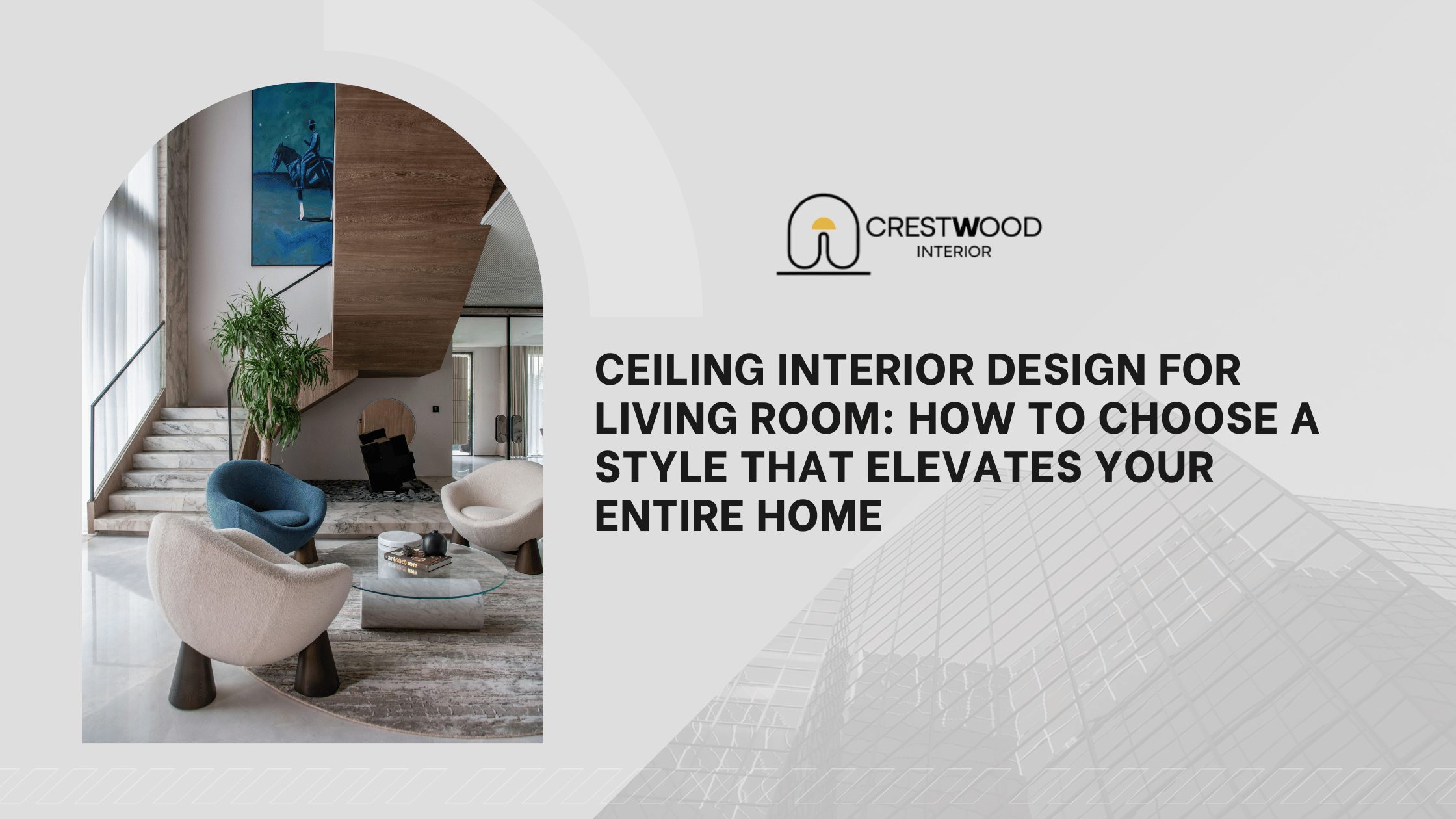
Ceiling Interior Design for Living Room: How to Choose a Style That Elevates Your Entire Home
When you walk into a room that feels spacious, welcoming, and perfectly balanced, you might look at the furniture or the wall colors. But more often than not, the secret ingredient is right above your head. The ceiling, often referred to as the “fifth wall,” is the most underutilized surface in residential design, yet it holds the most power to alter how a space feels.
For homeowners looking to create a cohesive and comfortable environment, paying attention to ceiling interior design for living room spaces is not just an aesthetic choice—it is a foundational one. It dictates the volume of the room, the quality of light, and the subconscious flow of energy throughout the house. Whether you are renovating an apartment or designing a villa from scratch, understanding the potential of your ceiling is the first step toward a truly elevated home.
Why Ceiling Interior Design for Living Room Sets the Tone for the Entire Home
It is easy to underestimate the psychological impact of a ceiling. We don’t walk on it, and we rarely touch it, so we assume it serves a purely structural function. However, in the world of interior psychology, the ceiling is the primary determinant of “spatial volume.”
The way a ceiling is treated sets the subconscious tone for the entire home. A flat, white ceiling can feel clean but potentially sterile. A ceiling with warm wood accents can instantly make a large room feel intimate. A well-executed ceiling interior design for living room areas does more than just cover the concrete slab; it acts as a visual anchor.
Imagine entering a living room where the ceiling features subtle cove lighting that washes the walls in a soft glow. Immediately, your brain registers “comfort” and “sophistication” before you even sit down. Conversely, a cluttered ceiling with poorly placed lights can make a room feel chaotic and oppressive, regardless of how expensive the sofa is. The ceiling establishes the vertical hierarchy of the room, drawing the eye upward and creating a sense of grandeur or coziness depending on the design intent. It is the silent conductor of your home’s visual orchestra.
Understanding the Role of Interior Roof Design for Living Room Spaces
To make informed decisions, we must move beyond the decorative aspect and understand the functional role of interior roof design for living room spaces. In modern architecture, especially in urban apartments where square footage is at a premium, the ceiling performs several critical tasks beyond aesthetics.
Creating Visual Height
The most common challenge in modern housing is limited ceiling height. A smart design can manipulate perception. By using peripheral coves or keeping the central area flush with the slab while dropping the borders, you can create an illusion of increased height. This trick forces the eye to travel to the brightest, highest point, making the room feel airier than it physically is.
Zoning in Open Layouts
Open-plan living is the norm today, merging living, dining, and sometimes kitchen areas into one large rectangle. Without walls to define these spaces, the ceiling becomes the primary zoning tool. A dropped ceiling panel over the seating area can subtly define the “living room” without closing it off from the dining area. This creates a psychological boundary that offers structure to an open floor plan, ensuring that the space feels organized rather than vast and undefined
Establishing Connections
A well-designed ceiling creates a seamless visual bridge between rooms. Instead of stopping abruptly at a doorway, design elements—like a running groove or a consistent cornice detail—can guide the eye from the living room into the hallway or dining space. This continuity is essential for achieving the best home interior look, where every room feels like part of a unified narrative rather than a disjointed collection of spaces.
How Home Interior Ceiling Design Impacts Light, Space & Daily Comfort
We often think of comfort in terms of soft cushions or ergonomic chairs, but home interior ceiling design plays a massive role in physiological comfort. This largely comes down to three factors: light management, airflow, and acoustics.
The Science of Light Reflection
The ceiling is the largest reflector of light in your home. A glossy finish reflects light directly, creating bright spots and potentially harsh glare. A matte or textured finish diffuses light, softening the ambiance. The design of your false ceiling dictates where light sources are placed. Recessed lighting (downlights) provides task lighting, while indirect lighting (cove lights) bounces light off the ceiling surface, creating a gentle, shadow-free glow that reduces eye strain. This balance is crucial for a living room, which must transition from a bright, active space during the day to a cozy, relaxing retreat at night.
Airflow and Thermal Comfort
The ceiling is the largest reflector of light in your home. A glossy finish reflects light directly, creating bright spots and potentially harsh glare. A matte or textured finish diffuses light, softening the ambiance. The design of your false ceiling dictates where light sources are placed. Recessed lighting (downlights) provides task lighting, while indirect lighting (cove lights) bounces light off the ceiling surface, creating a gentle, shadow-free glow that reduces eye strain. This balance is crucial for a living room, which must transition from a bright, active space during the day to a cozy, relaxing retreat at night.
Acoustic Control
Modern homes with hard surfaces—tile floors, glass windows, concrete walls—can be echo chambers. The ceiling offers a prime opportunity for sound absorption. Using acoustic panels or simply creating depth with a false ceiling can trap sound waves, reducing the echo and making conversations in the living room clearer and more intimate. This is particularly important for families who use the living room for both television watching and socializing.
Minimalist vs Statement Ceilings: Choosing What Fits Your Lifestyle
One of the biggest dilemmas homeowners face is choosing between a minimalist approach and a more expressive statement design. Neither is inherently better; the right choice depends entirely on your lifestyle and the architectural bones of your home.
The Case for Minimalist House Interior Design
If you lean towards a minimalist house interior design, your ceiling should be a quiet backdrop. This style focuses on clean lines, neutral colors, and the absence of heavy ornamentation.
- Design Traits: Shadow gaps (grooves) along the perimeter instead of heavy cornices; flush-mounted track lights; a “floating” ceiling look where the false ceiling stops inches from the wall.
- Why Choose It: It maximizes the sense of space and light. It is timeless, easy to maintain, and allows your furniture and art to take center stage. It is ideal for compact apartments or homes with lower ceilings where you want to avoid visual clutter.
The Case for Statement Ceilings
For those who view their home as a canvas for self-expression, the ceiling offers a massive playground.
- Design Traits: Wooden rafters or beams for warmth; coffered ceilings for a touch of classical elegance; wallpaper or textured paint within a ceiling tray; geometric POP designs.
- Why Choose It: It adds character and drama. A statement ceiling can correct the proportions of a long, narrow room or add warmth to a space with cold flooring. It works beautifully in homes with higher ceilings where you can afford to lose a few inches of height for the sake of design impact.
The key is alignment. A heavy, ornate ceiling in a small room will feel claustrophobic, while a plain flat ceiling in a grand, double-height living room might feel unfinished.
House Interior Ceiling Design That Works for Indian Living Rooms
Context is everything. A design that works in a Scandinavian loft might fail in a Hyderabad apartment. House interior ceiling design must respect the realities of the local environment and lifestyle.
Dealing with Ceiling Height Realities
Standard apartment ceiling heights in India are often around 9 to 10 feet. Once you account for flooring and the false ceiling drop for wiring and AC ducts, you might be left with 8.5 feet. In this context, deep multi-layered false ceilings are a mistake. Instead, “peripheral false ceilings” work best—dropping only the borders for lights and keeping the center high. This preserves the volume while allowing for modern lighting solutions.
Climate Considerations
Families with children or elderly parents need a company that prioritizes safety, durability, and traffic flow. You need a design partner who pushes back against sharp edges, fragile glass, and high-maintenance fabrics. You need a company that understands “active living”—where the house takes a beating and needs to survive it gracefully.
For Established Homeowners & Luxury Villas
In warmer climates, ceiling fans are non-negotiable. The design must accommodate them without them looking like an afterthought. A common error is placing a chandelier right next to a fan, causing visual clutter and potential safety hazards. A good design creates a dedicated “zone” for the fan, perhaps recessed slightly or centered in a coffer, ensuring it performs efficiently without dominating the aesthetic.
Family-Centric Layouts
Indian living rooms are high-traffic zones used by all generations. The ceiling design needs to support various activities. It needs bright light for cleaning or reading newspapers, and soft, dimmable light for watching TV or hosting guests. Layered lighting controls integrated into the ceiling design allow the room to adapt instantly to these shifting needs.
How the Best Interior Design Uses Ceilings to Create Visual Flow
The hallmark of the best interior design is that the eye moves effortlessly through the space. The ceiling is the highway for this visual journey.
When you look at professionally designed homes, you will notice that the ceiling lines often mimic the furniture layout below. A rectangular cove light might mirror the shape of the coffee table setup, creating a subconscious sense of order. Alternatively, a long linear light fixture might run parallel to the dining table, guiding the eye and emphasizing the length of the room.
Creating Continuity Across Spaces
Visual flow is about removing jarring interruptions. If your living room connects to a dining area, the ceiling design should not abruptly change styles. It can transition—perhaps the level changes slightly—but the language should remain consistent. For instance, if you use a wooden accent strip in the living room ceiling, repeating that material in the dining area ceiling ties the two zones together.
This technique is often used in interior design in Hyderabad, where homes frequently feature large, open layouts. Designers use the ceiling to create a “pathway,” guiding guests from the entrance into the social heart of the home without the need for walls or physical barriers.
Explore how ceiling planning integrates with complete home interiors.
Discover how a unified design approach can transform your living experience. Learn more about holistic interior planning here.
When to Involve Interior Decorators in Hyderabad for Ceiling Design Decisions
There is a misconception that ceiling design is purely the job of the contractor or architect. However, the timing of when you involve a designer is critical. Ceiling decisions are not just about POP (Plaster of Paris); they are about integration.
You should involve interior decorators in Hyderabad or design professionals at the earliest stage, ideally before electrical conduits are laid.
Coordination of Systems
The ceiling hides a complex web of services: electrical wires, AC copper pipes, internet cables, and sometimes fire safety sprinklers. If these are not planned in tandem with the furniture layout, you end up with a chandelier that isn’t centered over the table or a dark corner where you wanted a reading lamp. A professional creates a “Reflected Ceiling Plan” (RCP) that overlays lighting, electrical, and HVAC layouts onto the furniture plan, ensuring everything aligns perfectly.
Avoiding Rework
A common scenario is a homeowner realizing too late that they want a heavy swing or a specific light fixture, only to find the ceiling hasn’t been reinforced to hold the weight. Professional planning anticipates these needs. They know where to add plywood backing for heavy fixtures and how to route wires for future upgrades, saving you from messy and expensive rework later.
Get clarity on whether professional ceiling planning suits your living room.
Not sure where to start? Consult with an expert to review your layout and lighting needs. Book a consultation today.
Common Ceiling Design Mistakes That Reduce the Impact of Living Rooms
Even with good intentions, it is easy to get ceiling design wrong. Avoiding these common pitfalls ensures your living room remains spacious and elegant.
Over-Layering ( The "Wedding Cake" Effect)
In an attempt to be decorative, homeowners sometimes create too many steps or layers in the false ceiling. In a standard-height room, this heavy layering presses down on the space, making it feel suffocating. Rule of thumb: Keep it simple. One or two levels are usually sufficient to add depth without sacrificing height.
Poor Lighting Placement
The “Swiss Cheese” ceiling—where downlights are scattered randomly—is a design disaster. Lights should be placed with purpose: washing a wall with art, illuminating a task area, or providing general glow. Avoid placing downlights directly over seating positions where they will shine in people’s eyes.
Ignoring Proportions
A tiny tray ceiling in a massive room looks insignificant, while a massive geometric pattern in a small room looks overwhelming. The scale of the ceiling design must match the scale of the room. A good designer uses the “Rule of Thirds” or the Golden Ratio to ensure the design elements feel balanced and harmonious with the floor area.
Neglecting the Curtain Pelmet
Often, the ceiling design stops short of the windows, leaving the curtain rod exposed. A sophisticated touch is to create a “pelmet” or a recessed pocket in the ceiling where the curtain track is hidden. This allows the curtains to appear as if they are falling directly from the ceiling, adding height and elegance to the room.
Final Thought: The Right Ceiling Interior Design for Living Room Elevates Everyday Living
Ultimately, your home is a sanctuary, and the ceiling interior design for living room spaces plays a silent but powerful role in maintaining that sanctity. It is not about impressing guests with complex shapes or expensive chandeliers. It is about creating a volume of space that feels right—a space that holds light beautifully, manages sound effectively, and creates a backdrop for your life to unfold.
Choosing a ceiling style is a long-term decision. Unlike a rug or a sofa, you cannot easily swap it out if you get bored. Therefore, lean towards timelessness over trends. Whether you choose the clean lines of a minimalist house interior design or the warmth of wood accents, ensure the choice resonates with how you want to feel in the room, not just how you want it to look in a picture.
When you elevate your ceiling design, you elevate your everyday living experience. You move from simply occupying a room to truly inhabiting a designed environment that supports your well-being.
Speak with a design expert to align ceiling design with your home’s overall interior vision.
Ready to create a home that feels as good as it looks? Let’s craft a ceiling strategy that elevates your entire space. Contact us to start your design journey.